
Understanding Classic Casino Games

Classic casino games represent the backbone of platforms like FS Casino. They combine mathematical probability, strategic depth, and a sense of history that modern video slots rarely capture. For UK players who play in a regulated market, learning about these games is a practical step toward taking better decisions at the table. The line between pure chance and skill-based play determines the entire experience. This guide explores the mechanics, etiquette, and strategic frameworks of table games, card games, and live dealer formats. It’s for anyone who seeks to move past the flashing lights and engage with what makes a casino tick.
The Timeless Appeal of Tabletop Games
Classic table games sit at the historical heart of any casino, and their online versions carry that legacy forward without losing much in translation. Unlike solitary slots, these games revolve around a collective focal point, whether that’s a physical felt layout or a high-quality stream. The allure boils down to transparent mechanics: a roulette wheel spins with apparent physics, cards are shuffled according to rigorous protocols. For the player at FS Casino, this builds a sense of control, even when the results are completely random. Seeing a croupier handle the equipment establishes a kind of trust that digital random number generators sometimes fail to earn, despite stringent independent fairness testing.

The inherent rhythm of table games also accounts for their lasting power. A round of blackjack or baccarat unfolds at a measured pace, leaving room for thought and choices. This tempo exists in clear contrast to the fast sensory bombardment of volatile slots. Players who prefer these classics often seek a longer session where bankroll management can be implemented methodically. The numerical house edge in these games is likely to be lower than in other categories, provided the player sticks to optimal strategy. European roulette, for instance, maintains a static 2.7 percent edge, while blackjack can drop below one percent with perfect basic strategy.
The Social Dimension of the Green Felt
Even in a online environment, the interactive fabric of table games has been maintained through live dealer technology. A real human dealer runs the game from a dedicated studio, addressing players by username and responding to chat messages in real time. This interaction strips away the sterility that often sticks to automated software. The common experience of a dramatic card reveal, or the shared groan when the ball lands on an unlucky number, generates a sense of camaraderie. FS Casino facilitates this with low-latency streams where audio-visual synchronization is crisp, so the player has the sense of being an involved participant placed at a virtual table alongside other fans from across the UK.
Roulette Unraveled
Roulette stands as a monument to pure chance, but its complexity is often misjudged. The game’s design is a study in probability distribution. The primary versions available to UK players are European Roulette, with a single zero, and American Roulette, which adds a double zero. That extra pocket nearly doubles the house edge from 2.7 percent to 5.26 percent, a statistical chasm that fundamentally changes long-term viability. Grasping this distinction is the first lesson in casino literacy. The betting layout is a matrix of inside and outside wagers, each carrying distinct payout ratios that do not always align linearly with the odds of success.
Inside bets involve placing chips directly on a single number or a small cluster of adjacent numbers. A straight-up bet on a single number pays 35 to 1, but the true odds of hitting on a European wheel are 36 to 1. The gap indicates the house advantage. Outside bets cover broader categories such as red or black, odd or even, and high or low. These wagers pay even money or 2 to 1, offering a higher frequency of small wins. A balanced approach often blends both types to manage volatility. The racetrack layout, a standard feature at FS Casino, allows call bets that cover specific wheel sectors, appealing to players who follow physical patterns rather than numerical sequences. Common call bets include:
- Zero Neighbors: encompasses the 17 numbers surrounding the zero.
- Third of the Wheel: encompasses the 12 numbers facing the zero.
- Orphans: includes the two remaining slices of the wheel.
- Neighbours: a five-number bet on a selected number and its two neighbours on each side.
High-Level Wagering and the La Partage Rule
Astute players look for tables that use the La Partage or En Prison rules, hallmarks of player-friendly French Roulette. When an even-money outside bet is made and the ball lands on the single zero, La Partage gives back half the stake immediately, reducing the house edge on those wagers to 1.35 percent. The En Prison rule retains the bet for the next spin; if that spin wins, the original stake is refunded in full. These regulations are not mere formalities. They represent a significant concession to expected value. Verifying the specific table rules at FS Casino before committing funds is a prudent habit, as these differences directly influence the mathematical equity of a prolonged session.
Blackjack: The Tactical Challenge of The Perfect Hand
Blackjack distinguishes itself by introducing a real element of skill. The aim is straightforward: defeat the dealer’s hand without going over twenty-one. The decision tree stemming from each received hand, however, is detailed. The player must determine whether to hit, stand, double their bet, or split pairs based on their own visible cards and the dealer’s upcard. These moves are controlled by a well-established matrix known as basic strategy. This strategy outlines the most favorable statistical move for every imaginable combination, cutting the house edge to a theoretical minimum. Ignoring basic strategy turns blackjack into a chance-based game where the house advantage increases significantly, often going beyond two percent.
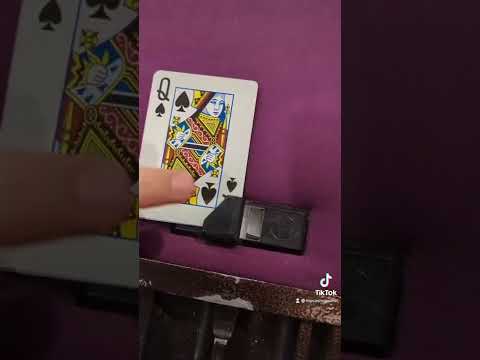
Applying basic strategy requires focus and memorization. A participant holding a hard sixteen facing a dealer’s ten upcard encounters a extremely challenging call. The theoretically right move is to hit, despite the significant bust likelihood, because standing forfeits more money over time. Alternatively, a pair of eights should always be split, irrespective of the dealer’s showing card, to escape the feared total of sixteen. FS Casino delivers an environment suitable to tactical play, especially in live dealer lobbies where the game pace enables sufficient decision-making time without actual crowd pressure. The lack of continuous shuffling machines in specific virtual tables also caters to those who monitor card flow, though digital reshuffling in standard RNG games leaves card counting irrelevant.
Managing Side Bets and Insurance
Modern blackjack platforms often feature side bets such as Perfect Pairs and 21+3. These propositions guarantee high payouts for specific card combinations but carry a significantly higher house edge than the main game, often ranging from four to ten percent. The insurance bet, available when the dealer shows an Ace, is another pitfall. It is fundamentally a side wager that the dealer has a natural blackjack. Unless a player is a sophisticated card counter who recognizes the deck is rich in ten-value cards, taking insurance is a losing proposition over time. The prudent approach is to refuse insurance and consider side bets strictly as entertainment expenses, not as included parts of a winning strategy. Common side bets comprise:
- Perfect Pairs: rewards for a pair in the player’s initial two cards, with higher payouts for suited or identical pairs.
- 21+3: joins the player’s two cards and the dealer’s upcard to form a three-card poker hand, paying for flushes, straights, and three of a kind.
- Insurance: a distinct bet that the dealer has blackjack, paying 2 to 1 but with a high house edge.
Live Dealer Technology and Secure Banking
Live dealer games depend on high-definition streams and Optical Character Recognition to translate physical card values and wheel results into digital data instantly. For UK players at FS Casino, this delivers an immersive experience where betting options are superimposed on the video feed, allowing tactile drag-and-drop chip placement. Latency must be imperceptibly low to maintain the illusion of presence; even a one-second delay interrupts the natural flow. Reputable platforms invest in dedicated studio facilities where dealers undergo rigorous training in game procedures, broadcast presence, and player interaction. The audio engineering is similarly vital, with noise-cancelled microphones ensuring that the shuffle of cards and the call of results are transmitted without ambient interference.
Mobile optimisation is a key consideration. The user interface must adapt to smaller screens without cluttering the table view. Controls for placing chips, adjusting stakes, and accessing chat must stay intuitive and responsive to touch. FS Casino’s mobile provision ensures that the video stream scales dynamically, preserving aspect ratio and card legibility. The ability to switch between landscape and portrait mode without reloading the stream is a hallmark of a sophisticated platform. This ergonomic focus directly influences the user’s ability to play extended sessions without fatigue or input errors.
Device Compatibility and User Interface Design
A fluid switch between desktop and mobile is a basic requirement. A well-designed platform employs responsive web technology or specialized mobile apps that maintain feature parity. The stake form, game history, and live chat functions must be reachable without obscuring critical visual information. For classic games, the readability of card pips and roulette number markings on a six-inch screen is paramount. The design approach emphasizes usability over decorative flourishes, ensuring that the Deal and Spin buttons are clearly positioned and scaled for easy thumb access. This careful consideration lowers entry mistakes and improves the overall user experience.
Safe banking forms the foundation of the entire experience. UK players can credit their accounts using debit cards, e-wallets like PayPal and Skrill, or bank transfers. Deposits are generally instantaneous, granting immediate access to live tables. Withdrawals, however, involve a mandatory pending period for security verification, a regulatory requirement to prevent fraud and money laundering. This pending period can extend from a few hours to 48 hours, based on internal protocols. Once approved, e-wallet transfers are often completed within hours, while debit card and bank wire transfers may take three to five business days. All transactions are protected by SSL encryption with 128-bit or 256-bit keys, establishing a cryptographic tunnel that renders intercepted data unintelligible. Furthermore, player funds are segregated from operational capital, as mandated by the UK Gambling Commission, guaranteeing balances remain protected even in the unlikely event of insolvency.
Safe Gaming and Compliance Adherence
The regulatory framework governing classic casino games in the UK remains rigorous and multifaceted. Operators are required to offer a range of responsible gaming tools that empower players to control their activity. These features are integrated prominently into the account dashboard, rather than being tucked away in obscure menus. FS Casino’s compliance with these protocols signals a commitment to player welfare that goes beyond the commercial imperative of maximizing handle. The accessible tools typically include:
- Deposit limits: daily, weekly, or monthly ceilings on funding.
- Reality checks: warnings indicating session duration and net position.
- Time-out periods: temporary account suspension for a selected duration.
- Self-exclusion: prevents access for a minimum of six months, up to five years.
Baccarat: The Sophisticated Game of Chance
Baccarat exudes an aura of exclusivity, yet it is one of the simplest and most statistically beneficial games present. The player chooses one of three decisions: support the Player hand, back the Banker hand, or place a Tie bet. No skill is required in the card drawing; a strict tableau of rules determines whether a third card is given. The croupier conducts all mechanics, permitting the participant to focus entirely on the wagering decision. This purity makes an ideal entry point for those intimidated by blackjack’s strategic demands. The house edge on the Banker bet is a slender 1.06 percent, rendering it one of the best bets in the entire casino, while the Player bet has a slightly higher edge of 1.24 percent.
The Tie bet, despite its alluring 8-to-1 or 9-to-1 payout, is a statistical disaster with a house edge climbing above 14 percent. Serious players ignore the Tie box entirely. The standard commission on winning Banker bets is five percent, which preserves the house edge on that advantageous wager. Some modern variants, often found in FS Casino live lobbies, offer No Commission Baccarat where a winning Banker total of six pays only half the stake. While this alters the dynamic slightly, the core principle holds: backing the Banker consistently is the mathematically sound baseline. The game’s brisk pace and provided scorecards appeal to trend-based bettors, though past results have no bearing on future independent outcomes. The three main bets and their house edges are:
- Banker: house edge 1.06% (with 5% commission on wins).
- Player wager: house edge 1.24%.
- Tie wager: house edge typically above 14%.
Pokerové varianty: Casino Hold’em and Beyond
Tradiční kasinový poker je zásadně odlišný from soutěžní hry. In titles like Casino Hold’em or Caribbean Stud, the player competes directly against dealera, not against other seated players. Tato strukturální změna mění strategickou kalkulaci entirely. Hráč musí vložit an initial ante bet, vidět své karty and komunitní karty, and then rozhodnout se, zda složit, přijít o ante, or to raise by placing an additional bet exactly double the ante. Krupier se musí kvalifikovat with a minimum hand, usually a pair of fours or better. If the dealer fails to qualify, the ante bet pays according to a fixed table, but navýšená sázka je push. Tento mechanismus vytváří a unique risk profile where agresivní hra is often mathematically correct to těžit z dealer non-qualification.
The payout system extracts the house value. While the ante bet may pay even money, the raise bet payouts based on a sliding scale of hand strength, starting from a pair and escalating dramatically for a straight, flush, or royal flush. The optional side bet, often designated as a progressive jackpot contribution, presents life-changing sums for a royal flush but holds an enormous house edge. The strategic core of Casino Hold’em centers on the fold-or-raise decision. Optimal strategy dictates raising on any hand containing a pair or better, and on many high-card hands with strong backdoor potential, especially when the board texture is uncoordinated. Folding too frequently erodes the bankroll silently through accumulated lost antes.
Three Card Poker and Pair Plus Dynamics
Three Card Poker provides a streamlined choice wherein every dealer and player receive only three cards. The game separates into two different bets: the Ante-Play and the Pair Plus. The Ante-Play pits the player’s hand against the dealer’s, with the dealer requiring queen-high or better to qualify. The Pair Plus bet excludes the dealer altogether; it pays based solely on the player’s hand strength. A mini-royal or straight flush yields significant returns. The straightforwardness of the Pair Plus bet keeps it popular, yet it is a total gamble with a set house edge, whereas the Ante-Play component allows a calculated decision based on the threshold of queen-six-four. Holding just that hand or better justifies a play bet; whatever lower should be dropped. Common Pair Plus payouts are:
- Mini-Royal (suited A-K-Q): 50 to 1 or more.
- Straight Flush: 40 to 1.
- Three of a Kind: 30 to 1.
- Straight: 6 to 1.
- Flush: 3 to 1.
- Pair: 1 to 1.
FAQ
What is the variation between European and American Roulette?
The primary contrast lies in the number of green pockets. European Roulette includes a single zero, yielding a house edge of 2.7 percent. American Roulette incorporates a double zero pocket, which nearly doubles the house edge to 5.26 percent. This architectural difference means that over an extended session, a player’s theoretical loss rate is substantially higher on the American variant. For bankroll preservation, the single-zero European or French wheels are the clearly superior choice for UK players.
Will basic strategy assure I will win at Blackjack?
Basic strategy doesn’t guarantee a winning session; it is a defensive mathematical framework crafted to lower the house edge to its lowest possible theoretical point, often below one percent. It prescribes the statistically optimal move for every hand combination against the dealer’s upcard. While it limits losses over the long run and eliminates costly intuitive mistakes, blackjack continues to be a negative expectation game. Short-term variance can still generate losing streaks even when playing flawlessly.
How come is the Banker bet in Baccarat viewed as the best?
Betting on the Banker is mathematically better because it succeeds marginally more frequently than the Player bet, once the drawing rules are used. The house edge on the Banker wager is roughly 1.06 percent, compared to 1.24 percent on the Player bet. The casino levies a five percent commission on winning Banker bets to preserve this edge. Notwithstanding this commission, the lower house advantage makes it the most statistically optimal baseline wager in the game of Baccarat.
Are there live dealer games rigged or controlled?
Licensed live dealer games are not fixed. They operate under strict regulatory oversight from organisations like the UK Gambling Commission. The physical cards and wheels are regular equipment, and dealers follow fixed procedures. Multiple camera angles allow players to observe every action in real time. The games use genuine random outcomes produced by physical processes, not computer algorithms, making manipulation extremely difficult and illegal under the terms of the operator’s licence.
Which payment methods are usually available for UK players?
UK players commonly have the ability to use safe payment options. Debit cards such as Visa and Mastercard are universally accepted for instant deposits. E-wallets like PayPal, Skrill, and Neteller give an further layer of privacy and faster withdrawal times. Bank transfers are accessible for larger transactions, though they go through more slowly. Prepaid vouchers and mobile billing options might also be available, but credit cards are banned for online gambling by UK regulation.
How long do withdrawals take to process?
Withdrawal timelines consist of an internal processing period combined with the payment method’s transit time. The internal review typically takes between 24 and 48 hours, when the finance team verifies the account. Once approved, e-wallet withdrawals are often credited within hours. Debit card transfers and bank wires are slower, generally requiring three to five business days to be reflected in the player’s account. The overall speed is determined by the efficiency of the verification process and the selected method.
How does the La Partage rule apply to Roulette?
The La Partage rule represents a player-beneficial feature seen in French Roulette. It pertains specifically to even-money outside bets, like red/black or odd/even. If the ball comes to rest on the single zero, the player does not lose the entire stake; rather, half of the wager is given back immediately. This rule effectively lowers the house edge on those specific bets from 2.7 percent to 1.35 percent, rendering it a extremely favorable condition for strategic roulette players.